
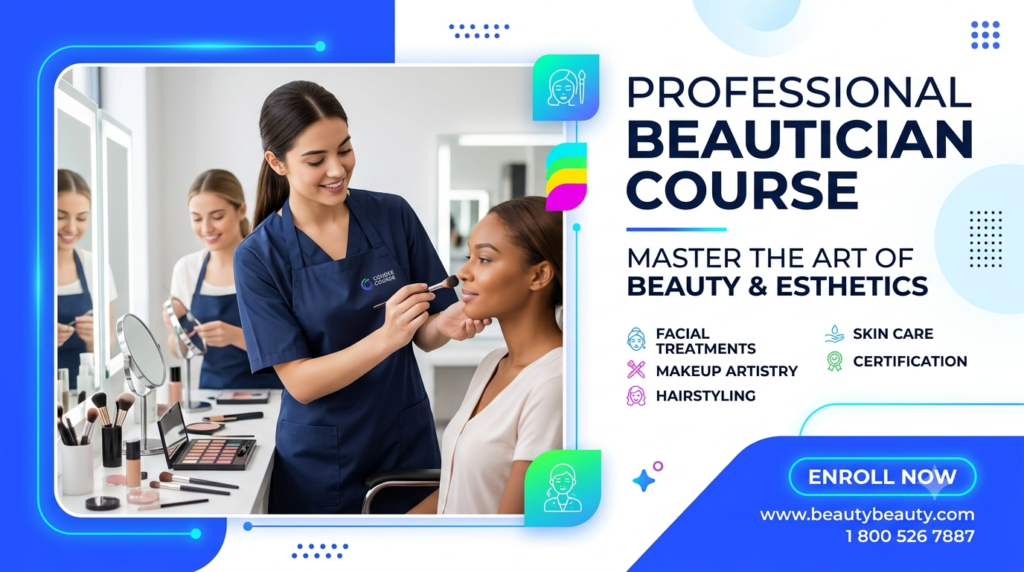
The beauty and wellness industry has become one of the most promising career sectors for individuals who are passionate about beauty, personal care, skincare, haircare, makeup, and wellness services. With increasing awareness about grooming and professional beauty treatments, the demand for trained beauticians continues to grow across salons, beauty clinics, spas, wellness centres, hotels, bridal studios, and independent businesses.
A Professional Beautician Course provides structured training in essential beauty treatments and professional salon techniques. We help learners develop practical skills, understand professional hygiene standards, work confidently with clients, and prepare for opportunities within the growing beauty and wellness sector.
Whether you are a beginner looking to enter the beauty industry, a working professional seeking additional skills, or an aspiring entrepreneur planning to start a beauty salon, professional beautician training can provide a strong foundation for your career.
What Is a Professional Beautician Course?
A Professional Beautician Course is a career-oriented training programme designed to teach students the practical and theoretical aspects of beauty care and salon services.
The course generally covers multiple areas of professional beauty services, including skincare, facial treatments, haircare, hair styling, makeup, manicure, pedicure, waxing, threading, client consultation, salon hygiene, and beauty product knowledge.
Rather than focusing only on theoretical knowledge, professional beautician training places considerable emphasis on practical learning. Students get the opportunity to understand different beauty procedures, learn how professional equipment is used, and develop the confidence required to provide services to clients.
A well-structured course can therefore help learners transform their interest in beauty into a practical and potentially rewarding career.
Why Choose a Professional Beautician Course?
The beauty industry offers a wide range of career possibilities. People increasingly invest in personal grooming, skincare, makeup, haircare, and wellness services, creating opportunities for trained professionals.
We recommend professional beautician training because it can help learners:
- Develop professional beauty and salon skills
- Learn modern skincare and beauty techniques
- Understand professional hygiene and sanitation
- Gain practical experience in beauty treatments
- Improve client consultation and communication skills
- Understand different beauty products and their applications
- Build confidence in providing salon services
- Explore employment opportunities in the beauty industry
- Develop skills required to work independently
- Prepare for starting a beauty salon or home-based beauty service
Professional training can also provide an advantage over learning beauty techniques informally because students receive structured exposure to different aspects of the profession.
Professional Beautician Course Eligibility
One of the major advantages of beautician training is that the entry requirements are generally accessible to learners from different educational backgrounds.
Depending on the institution and course level, eligibility may vary. Many beginner-level beautician courses may accept students who have completed their basic schooling, while advanced programmes may have additional requirements.
Before enrolling, we recommend checking the specific educational qualification, age requirement, course duration, practical training requirements, and certification details of the institution offering the programme.
The course can be suitable for:
- Students interested in beauty and wellness
- Beginners seeking a vocational career
- Individuals looking for skill-based education
- Existing salon workers wanting professional training
- Makeup and beauty enthusiasts
- Homemakers interested in developing income-generating skills
- Entrepreneurs planning to start a salon
- Professionals looking to expand their existing beauty services
What Do We Learn in a Professional Beautician Course?
A comprehensive beautician course can introduce learners to a broad range of professional beauty services.
1. Skincare and Facial Treatments
Skincare is an important part of professional beauty services. Students learn about different skin types, basic skin analysis, cleansing procedures, exfoliation, masks, moisturisation, and facial techniques.
We also focus on understanding the importance of maintaining hygiene and choosing suitable products for different client requirements.
2. Haircare and Hair Styling
Haircare forms another important component of professional beautician training. Students can learn basic haircare procedures, hair washing, conditioning, blow-drying, styling, and other salon techniques.
Depending on the course curriculum, learners may also receive an introduction to hair colouring, hair treatments, and contemporary styling techniques.
3. Professional Makeup
Makeup is one of the most popular areas of the beauty industry. Professional training can introduce students to basic makeup, party makeup, bridal makeup, corrective makeup, product selection, facial preparation, and professional makeup techniques.
Students can learn how different products, tools, shades, and techniques are selected according to a client’s requirements.
4. Manicure and Pedicure
Professional beautician courses commonly include nail and foot care. Learners can develop practical knowledge of manicure and pedicure procedures, nail preparation, cleaning, shaping, massage, and appropriate product usage.
5. Waxing and Threading
Hair-removal services are frequently offered by beauty professionals. Students can learn appropriate techniques for waxing and threading while understanding important hygiene and client-safety practices.
6. Beauty Product Knowledge
A professional beautician needs to understand the products used during beauty treatments. Training can introduce learners to different categories of skincare, haircare, makeup, and salon products.
We emphasize the importance of selecting products according to the client’s requirements and following manufacturer instructions.
7. Salon Hygiene and Safety
Professional hygiene is essential in the beauty industry. Students learn the importance of clean tools, sanitized equipment, hygienic workspaces, appropriate product handling, personal cleanliness, and safe working practices.
These practices help create a professional environment and contribute to a positive client experience.
Professional Beautician Course Duration
The duration of a beautician course depends on the level and curriculum of the programme.
Short-term courses may focus on specific beauty skills, while comprehensive professional programmes may require a longer period of training. Advanced courses can also provide specialized instruction in areas such as makeup, skincare, haircare, nail care, or salon management.
When selecting a programme, we recommend considering course duration, practical training, curriculum, certification, instructor experience, learning facilities, and career support rather than choosing a course based solely on its duration.
Career Opportunities After a Professional Beautician Course
A professional beautician qualification can open doors to different employment and self-employment opportunities.
After completing appropriate training, learners may explore careers such as:
- Professional Beautician
- Beauty Therapist
- Makeup Artist
- Hair Stylist
- Skincare Assistant
- Salon Professional
- Bridal Makeup Artist
- Nail Care Professional
- Spa and Wellness Professional
- Beauty Consultant
- Salon Manager
- Beauty Entrepreneur
Career opportunities may be available in beauty salons, spas, hotels, resorts, wellness centres, bridal studios, cosmetic businesses, and independent beauty services.
Start Your Own Beauty Salon
One of the biggest advantages of acquiring professional beauty skills is the possibility of entrepreneurship.
After gaining sufficient practical experience, individuals may consider establishing their own beauty salon, home salon, bridal makeup service, beauty studio, or mobile beauty service.
Running a beauty business requires more than technical skills. We also recommend developing knowledge of:
- Customer service
- Pricing
- Appointment management
- Inventory management
- Marketing
- Social media promotion
- Basic accounting
- Salon hygiene
- Staff management
- Client retention
- Business planning
Combining professional beauty skills with business knowledge can help aspiring entrepreneurs build a sustainable beauty and wellness business.
Professional Beautician Course for Beginners
Beginners do not necessarily need extensive prior experience in the beauty industry. A structured course can help them develop skills progressively.
We recommend starting with fundamental topics such as skincare, basic makeup, haircare, manicure, pedicure, threading, waxing, hygiene, and client communication before progressing toward advanced techniques.
Practical training is particularly important for beginners because professional beauty services require hand skills, precision, confidence, and attention to detail.
Skills Required to Become a Successful Beautician
Technical knowledge is important, but successful beauticians also require strong interpersonal and professional skills.
Important qualities include:
Communication: A beautician must understand client requirements and communicate clearly.
Attention to Detail: Beauty treatments require precision and careful execution.
Creativity: Makeup, hairstyling, and beauty services often require creative thinking.
Patience: Professionals may need to spend considerable time understanding and serving individual clients.
Hygiene Awareness: Cleanliness and sanitation are essential in professional beauty services.
Customer Service: Positive client experiences can contribute to repeat business and referrals.
Continuous Learning: Beauty trends, techniques, products, and technologies continue to evolve, making ongoing learning valuable.
How to Choose the Best Professional Beautician Course
Choosing the right course is an important decision. We recommend evaluating the programme carefully before admission.
Consider the following factors:
Comprehensive Curriculum
Look for a course covering the major areas of beauty care rather than focusing on only one basic technique.
Practical Training
Beauty is a practical profession. A course should provide adequate opportunities to practise professional procedures.
Experienced Trainers
Qualified and experienced instructors can make the learning process more effective by demonstrating techniques and correcting practical mistakes.
Certification
Check whether the institution provides a certificate after successful completion and understand what the certification represents.
Training Facilities
Good learning facilities, appropriate beauty equipment, and practical training resources can improve the learning experience.
Career and Business Guidance
Courses that provide guidance about employment, freelancing, salon operations, or entrepreneurship can be particularly useful for students planning their future career.
Is a Professional Beautician Course a Good Career Choice?
For individuals interested in beauty, personal care, makeup, skincare, and wellness, professional beautician training can be a practical career pathway.
The industry provides multiple ways to build a career. Some professionals choose employment in established salons, while others specialize in makeup, skincare, hair styling, or bridal services. Experienced professionals may eventually establish their own businesses.
The career can also provide flexibility for individuals interested in freelancing, home-based services, appointment-based work, or entrepreneurship.
However, long-term success depends on practical competence, professionalism, client satisfaction, continuous learning, and business skills.
Frequently Asked Questions About Professional Beautician Courses
What is a Professional Beautician Course?
A Professional Beautician Course is a vocational training programme that teaches practical beauty and salon skills such as skincare, makeup, haircare, manicure, pedicure, waxing, threading, hygiene, and client care.
Who can join a Professional Beautician Course?
Eligibility depends on the institution and programme. Many introductory courses are designed for beginners and may have relatively accessible educational requirements.
Is a beautician course suitable for beginners?
Yes. Beginner-oriented programmes can provide foundational knowledge and practical training for individuals without previous professional beauty experience.
Can I become a makeup artist after completing a beautician course?
A beautician course can provide foundational makeup skills. Individuals who want to specialize in professional or bridal makeup may benefit from additional advanced makeup training and extensive practical practice.
Can I start my own beauty salon after completing the course?
Professional training can provide important technical skills for salon entrepreneurship. However, starting a business also requires appropriate planning, investment, local registrations or licences where applicable, marketing, financial management, and business knowledge.
What are the career opportunities after beautician training?
Depending on skills and experience, learners can explore opportunities as beauticians, beauty therapists, makeup artists, hair stylists, skincare professionals, salon professionals, beauty consultants, freelancers, and beauty entrepreneurs.
How long does a Professional Beautician Course take?
Course duration varies according to the programme, specialization, and training provider. Short-term programmes may focus on specific skills, while comprehensive programmes generally require more extensive training.
Conclusion
A Professional Beautician Course can provide a valuable foundation for individuals who want to build a career in the beauty and wellness industry. Through structured learning, practical training, and professional guidance, learners can develop skills in skincare, makeup, haircare, nail care, beauty treatments, hygiene, and client service.
The beauty industry offers diverse career pathways, from working in salons and spas to becoming a freelance makeup artist or establishing an independent beauty business. With continuous practice, professional discipline, creativity, and a commitment to learning new techniques, trained beauticians can develop rewarding careers in this expanding sector.
For anyone passionate about beauty, personal care, makeup, skincare, hair styling, and entrepreneurship, professional beautician training can be an important first step toward turning that interest into a practical career.
Choose the right training, build strong practical skills, serve clients professionally, and continue learning to create a successful future in the beauty and wellness industry.